
Q2 2026 Quarterly Update

◤ IN REVIEW: Q2 2026
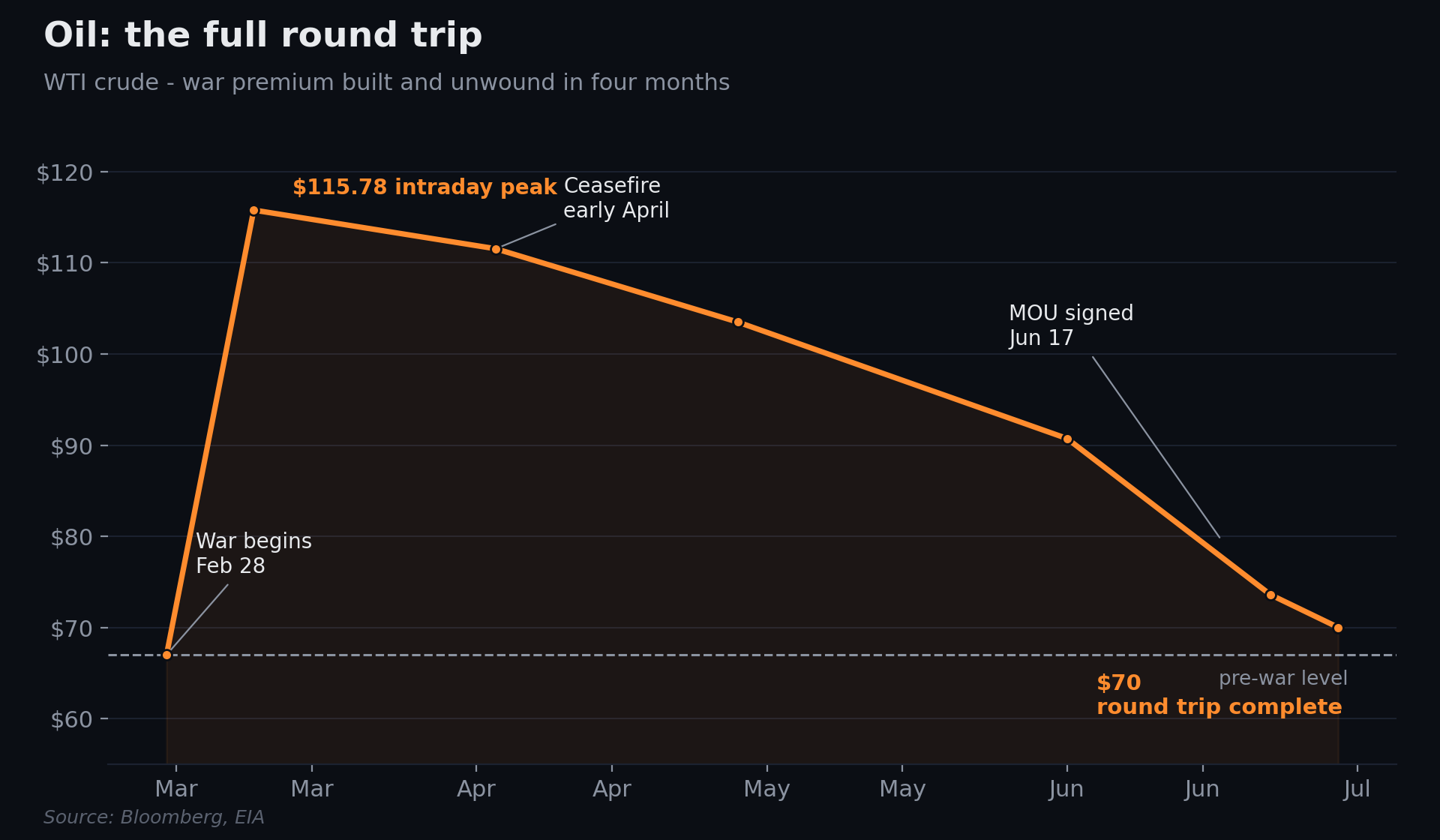
In April we wrote that resolution in the Middle East was binary - if the Strait of Hormuz reopened, markets would likely snap back quickly. That is largely what played out. A ceasefire took hold in early April, and on June 17 the U.S. and Iran signed a memorandum of understanding intended to formally end the war - still contested and only partially implemented, but a genuine turn. Oil gave back nearly its entire war premium, equities staged a powerful recovery, and the crisis leaders - energy, defense, and gold - handed the baton back to technology.
But the war left a bill behind, and it is being paid through inflation. Prices hit three-year highs, a new Fed Chair debuted to hawkish reviews, and the November midterms now hang over everything Washington does.
◤ ECONOMICS
Growth & Inflation
The economy absorbed the oil shock better than feared. Q1 GDP was finalized at 2.1% annualized, better than early estimates. The consumer has held up - income and spending each rose 0.7% in May, and confidence improved in June as gasoline prices fell. Labor markets have slowed without cracking: job growth averaged 92K per month in the first half, a marked improvement from late 2025, though June's 57K gain came with downward revisions and participation at its lowest since 2021. Unemployment sits at 4.2%.
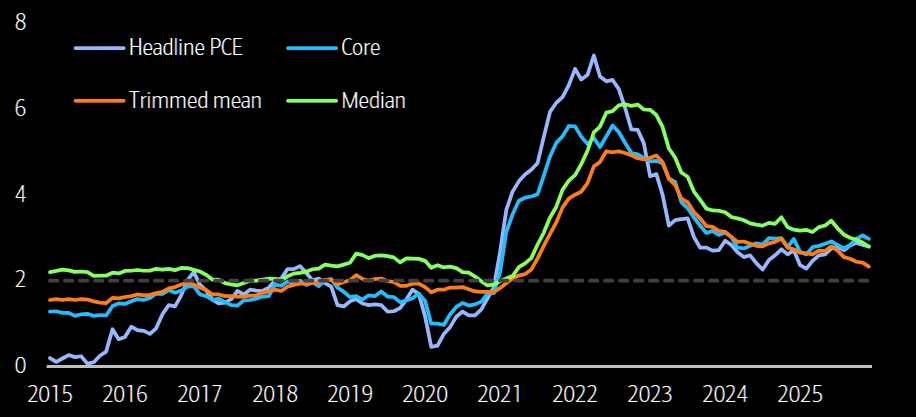
Inflation is the problem. Headline PCE hit 4.1% in May, CPI 4.2%, and core PCE 3.4% - the highest readings since 2023. The encouraging news: this is largely last quarter's shock showing up in this quarter's data. WTI peaked above $111 in early April and ended June near $70, roughly pre-war levels, and wholesale energy prices have already normalized. If crude holds here, headline inflation rolls over meaningfully into the fall.
Monetary Policy & Liquidity
Kevin Warsh was confirmed May 13 and chaired his first meeting in June. The committee held rates at 3.50-3.75% for a fourth straight meeting, dropped its easing bias, and nine of eighteen policymakers now project a hike this year. Markets briefly priced better-than-even odds of a September move.
We read it differently: Warsh is likely a dove in hawk's clothing. He has argued for years that AI is structurally disinflationary and allows the Fed to run rates lower - not the makings of a hawk. But he inherited a committee leaning firmly the other way and a Fed that has missed its target for five years running, so job one is inflation-fighting credibility - the very thing that creates room to ease later. His five task forces (inflation framework, AI and productivity, real-time data, the balance sheet, communications) are the mechanism: staffed with outside experts of his choosing and largely concluding by year-end, built to make the data-driven case that brings the committee to his conclusions on its own terms. He submitted no rate projection of his own, scrapped forward guidance, and days after quarter-end noted there is "no urgency" to raise rates. We do not expect a hike before the election, and we see the groundwork being laid for cuts in 2027.
Financial Markets
Equities delivered their best quarter since 2020 - the S&P 500 gained 14.9% and the Nasdaq 21.4%, with record highs by early June before a late-quarter pause. Leadership rotated back to technology but stayed narrow, concentrated in a handful of AI infrastructure names. The losers told the same story in reverse: gold fell from above $4,600 to a seven-month low before stabilizing near $4,100, and the 10-year Treasury climbed to 4.5%, a one-year high, after the Fed's June meeting.
◤ WHAT’S AHEAD
The June agreement is a truce, not a resolution. The fighting has flickered back on more than once since the signing - drone attacks on shipping, retaliatory U.S. strikes - and we expect the formal end of this war to be an on-again, off-again affair rather than a clean break. Markets have treated each flare-up as short-lived, and we agree: both sides have too much riding on this deal for it to fail outright. Not least the administration - the war had become a drag on the President's approval just as affordability became voters' top concern, and with the House at genuine risk in November, the Senate is the line the administration cannot afford to lose. Expect everything from energy prices to market levels to be managed with that in mind.
Near - Medium Term (3-6 Months)
Three forces will shape markets into year-end: structural flows, the macro/fundamental backdrop, and the administration’s political incentive to keep markets stable ahead of the midterms. Through late summer, the first and third remain supportive. Market flows should stay favorable into September, while the administration has every reason to keep gasoline cheap, headlines calm, and financial conditions steady. With the Fed also likely on hold through November, the setup remains constructive: some chop, dips that get bought, and limited risk of a sustained drawdown over the next several months.
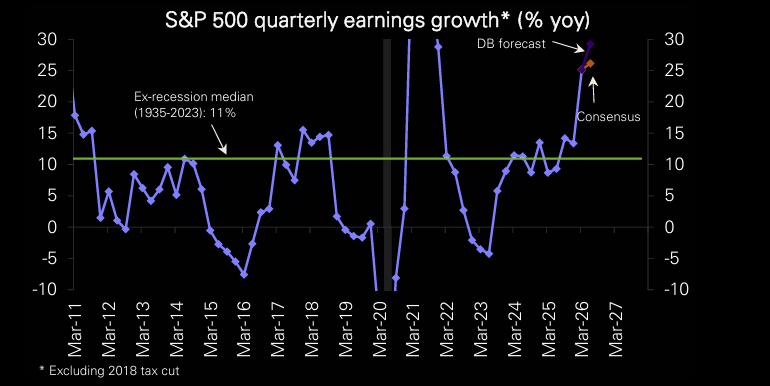
Earnings provide the fundamental support. Analysts raised Q2 estimates during the quarter, the opposite of the usual pattern, and now expect 23.3% growth, a second consecutive quarter above 20%, with positive guidance running well above historical norms. This is also the second quarter in a row where rising intra-quarter estimates buck the historical downward revision trend. As we have said before, earnings durability is what carries this market, particularly as growth outside the AI investment cycle softens.
The setup becomes less friendly from September into the election. Structural flows begin to fade just as slower growth and sticky inflation become harder to ignore. The administration will remain highly motivated to support markets, so we would not assume volatility becomes disorderly, but markets should become increasingly sensitive to polling, policy announcements, energy prices, and geopolitical headlines. After the midterms, that cushion weakens further. The political incentive to keep markets at their highs fades, year-end flows largely run their course by mid-December, and issues currently being smoothed over can resurface on less friendly terms. With valuations back near 22x forward earnings, our approach is to participate through the summer while becoming incrementally more guarded as the election and year-end approach.
Longer Term (6+ Months)
A more difficult post-election window may ultimately create the economic and political cover for a policy response in 2027. If our read on Warsh is right, the task forces conclude around year-end and provide the intellectual foundation for a data-driven easing cycle, with the committee on board rather than dragged along. Markets currently priced for hikes would have meaningful room to reprice, providing a powerful catalyst for both equities and bonds, particularly rate-sensitive segments like housing that have been frozen for years.
The structural picture is otherwise consistent with what we laid out in January and April. The war added tens of billions in supplemental defense spending, the FY2027 defense authorization tops $1 trillion for the first time, and reconstruction commitments in the region run into the hundreds of billions. One nuance worth noting: the Big Beautiful Bill's tax impulse is now largely in the system - the bigger refunds landed this spring - while its offsetting spending restraint, starting with Medicaid, begins phasing in from here. The net federal impulse is shifting from tax stimulus toward defense and security spending, with deficits grinding higher either way. That mix is precisely what underpins our Debasement theme, and we view gold's second quarter correction as a positioning unwind driven by the rate scare, not a change in the underlying thesis.
The AI investment cycle, meanwhile, accelerated through the war as if it weren't happening. Global capital commitments continue to scale, and productivity gains are showing up in near-record corporate margins. We are watching the financing side more closely: some large players are now funding buildouts with debt against negative free cash flow, which is how early-cycle booms typically begin separating winners from losers. Selectivity within the theme matters more than it did a year ago.
Pulling it together: it is hard to be bearish on equities over a longer horizon when the earnings picture looks like this. Analysts project roughly 24% earnings growth for full-year 2026 - although concentrated in AI and energy names - with both second-half quarters expected to come in above 20%, margins near record levels, and estimates that were revised higher straight through a war - the definition of earnings resilience. We take the risks outlined above seriously, but they argue for repositioning through the volatile stretches we expect around the election and year-end, not for stepping away from equities. Periods of turbulence in a market with this much earnings power behind it have historically been opportunities, and we intend to treat them that way.
◤ KEY LEVELS (AS OF JULY 2026)
▸GDP Growth (2026 Est): 2.2%
▸Inflation (Y/Y PCE): 4.1%
▸Unemployment Rate: 4.2%
▸Fed Funds Tgt: 3.5 - 3.75%
▸10 Year Treas Yield: 4.5%
◤ REASONS TO BE BULLISH
Earnings Are Doing the Driving: 29% growth delivered in Q1, 23.3% expected in Q2, and full-year estimates revised up 6% during the quarter - though concentrated, with a handful of AI names responsible for the bulk of the revisions. Markets powered by earnings growth rather than multiple expansion have historically continued higher unless a recession intervenes - and recession odds have been falling, not rising.
The Inflation Impulse Is Fading: Oil is back near pre-war levels, wholesale energy prices have normalized, and gasoline is falling. The prints that spooked markets reflect April's oil, not July's. Base effects turn favorable into the fall.
The Easing Setup Is Building: With markets priced for hikes, our expectation of a patient Fed now and a task-force-justified cutting cycle in 2027 represents meaningful upside repricing potential that few are positioned for.
Election Incentives Favor Calm: The administration needs steady markets and a quiet Middle East into November, and it has both the motive and the tools to deliver them through the summer.
◤ REASONS TO BE BEARISH
The Committee May Not Wait: Whatever Warsh's ultimate intentions, half his committee projects higher rates this year. A hike into a labor market adding 57K jobs a month is how policy mistakes happen.
A Fragile Truce With No Cushion Behind It: The MOU has already been tested by drone attacks and retaliatory strikes, and the toll dispute remains unresolved. Meanwhile, much of today's oil supply reflects inventory drawdowns rather than restored production, with OECD stockpiles headed toward multi-decade lows. A breakdown wouldn't just reprice oil - it would hit a market with almost no buffer left, dragging inflation and rate expectations with it.
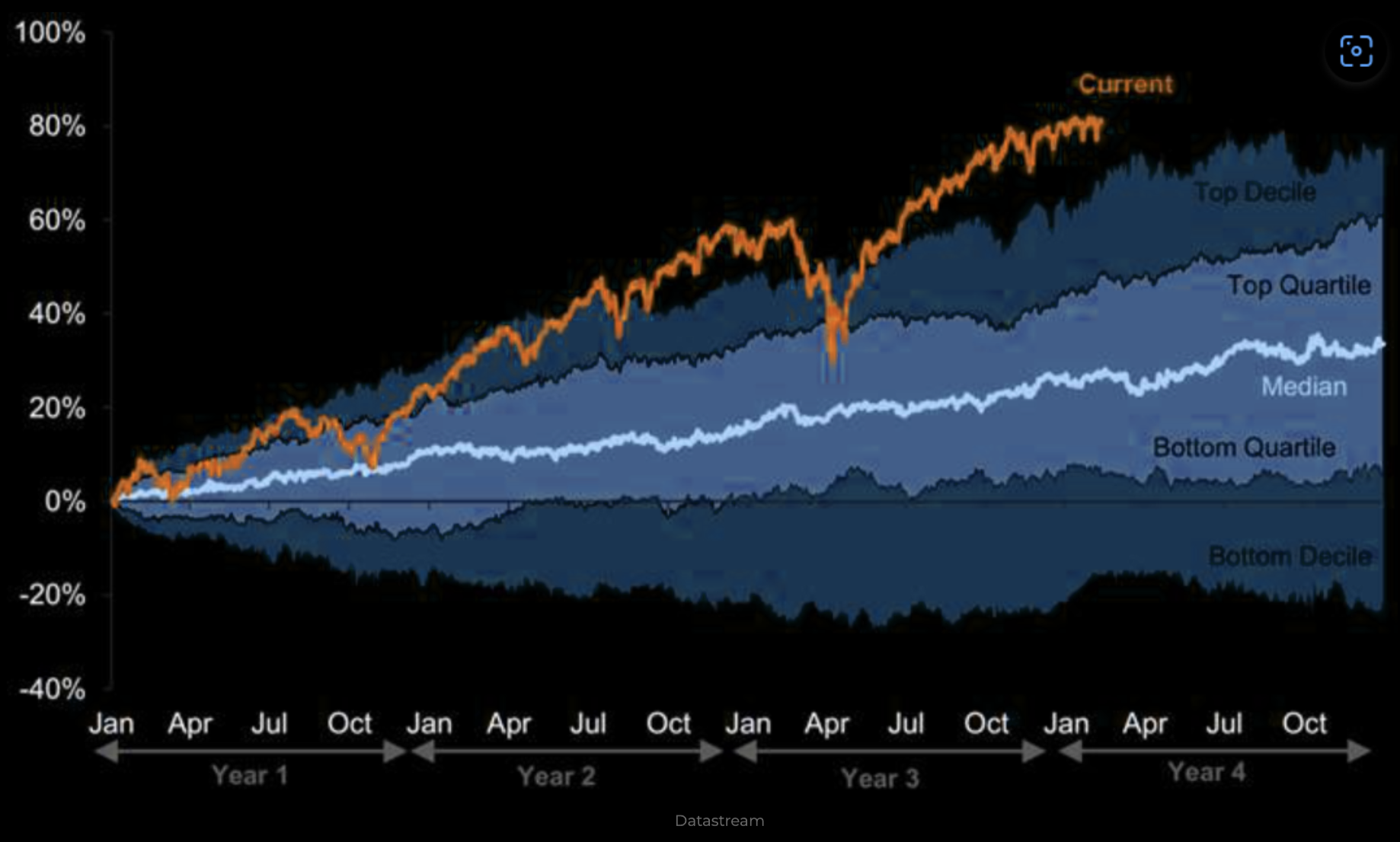
Valuations & Market Exhaustion: At roughly 22x forward earnings, markets are priced for the good outcome on the war, the Fed, and earnings simultaneously. That would be less concerning if the run were young - but this rally is now in its fourth year, following three consecutive years of double-digit gains. Measured against nearly a century of market history, the surge off the late-2022 lows is tracking above even the top decile of past bull markets (see chart below). None of this means the advance ends here, but the market has already pulled forward an extraordinary amount of good news, and the fuel for upside surprises is thinner than at any point in this cycle.
◤ PORTFOLIO HIGHLIGHTS & CURRENT THEMES
AI & Technology: Our largest thematic exposure led the way this quarter. NVDA reached new all-time highs in May and announced an $80 billion buyback alongside a substantial dividend increase, MSFT and GOOGL contributed strongly - with Alphabet among the largest contributors to index-level earnings growth on accelerating cloud results - and QQQ captured the Nasdaq's best quarter since 2020. The quarter's most explosive gains came from AI memory and infrastructure suppliers, which our portfolios participate in primarily through QQQ. Across the theme, we favor companies funding the buildout from their own cash flow rather than debt - a distinction we expect to matter more from here.
Energy & Defense: XOM and CVX contributed strongly through the first half of the quarter and remain supported by exceptional earnings - the energy sector is expected to more than double profits year-over-year in Q2. Defense and industrial exposure via ITA, HON, and CAT cooled as peace took hold, but the first-ever $1 trillion-plus defense authorization keeps us constructive. We view these as core holdings for the fragmentation era, not trades on the war.
Debasement & Real Assets: Gold was the quarter's detractor after leading in Q1, as the June rate scare pushed real yields higher and crowded positioning unwound. Our IAU exposure remains in place - the fiscal and geopolitical drivers of the theme strengthened this quarter even as the price corrected, and an easing Fed in 2027 would add fuel. Bitcoin (HODL, CDX) faced similar pressure, compounded by forced selling from large corporate holders. Sizing remains deliberate.
Quality & Consumer Resilience: JPM, V, WMT, and COST performed their role as steady compounders. UNH has been a standout, up more than 25% this year as its recovery continues - it reports in mid-July and we expect it to set the tone for the sector. LLY remains a high-conviction healthcare name despite sector-wide pressure; healthcare is the lone sector expected to post negative earnings growth in Q2, and we continue to prefer selective quality over broad exposure there.
Alternatives: BUCK, CTA, and QMNNX did exactly what they are designed to do - providing ballast through April's volatility and steady returns as markets recovered. In a quarter where bonds sold off alongside the inflation surprise, uncorrelated return streams continued to earn their place in Enhanced Growth and Enhanced Income.
◤ CLOSING THOUGHTS
The peace is provisional, the inflation it left behind is real, and the political calendar now shapes everything from energy prices to Fed policy. We expect the summer to be kinder to investors than the fall - and we intend to use both accordingly: participating while flows and politics remain supportive, and getting incrementally more guarded as the election and year-end approach.
But the route should not be confused with the destination. Earnings power of this magnitude, an AI buildout that ran straight through a war, structural forces that keep strengthening behind our Debasement theme, and what we believe is an easing cycle being quietly assembled for 2027 - together, these make the longer-term bearish case the harder one to argue. The volatility we expect into year-end is something to reposition through, not retreat from.
This content, which contains security-related opinions and/or information, is provided for informational purposes only and should not be relied upon in any manner as professional advice, or an endorsement of any practices, products or services. There can be no guarantees or assurances that the views expressed here will be applicable for any particular facts or circumstances, and should not be relied upon in any manner. You should consult your own advisers as to legal, business, tax, and other related matters concerning any investment. References to any securities or digital assets, or performance data, are for illustrative purposes only and do not constitute an investment recommendation or offer to provide investment advisory services. Charts and graphs provided within are for informational purposes solely and should not be relied upon when making any investment decision. Past performance is not indicative of future results. The content speaks only as of the date indicated. Any projections, estimates, forecasts, targets, prospects, and/or opinions expressed in these materials are subject to change without notice and may differ or be contrary to opinions expressed by others. Investments in securities involve the risk of loss. Clients of DePaolo & May Strategic Wealth may hold positions in the securities discussed in this content. Please see disclosures here.
Strategize With Us
Ready to achieve your financial goals?
Or fill out the form and we'll reach out within 24 hours.