
Q3 2026Quarterly Update
In Review: Q3 2026
In July we wrote that we expected the summer to be kinder to investors than the fall. That largely held - stocks pushed to record highs in August on the strongest earnings growth in five years - but the fall arrived early. The June agreement with Iran gave way to renewed fighting, oil climbed back above $90, the Fed raised rates for the first time since 2023, and long-term Treasury yields reached levels last seen in 2002.
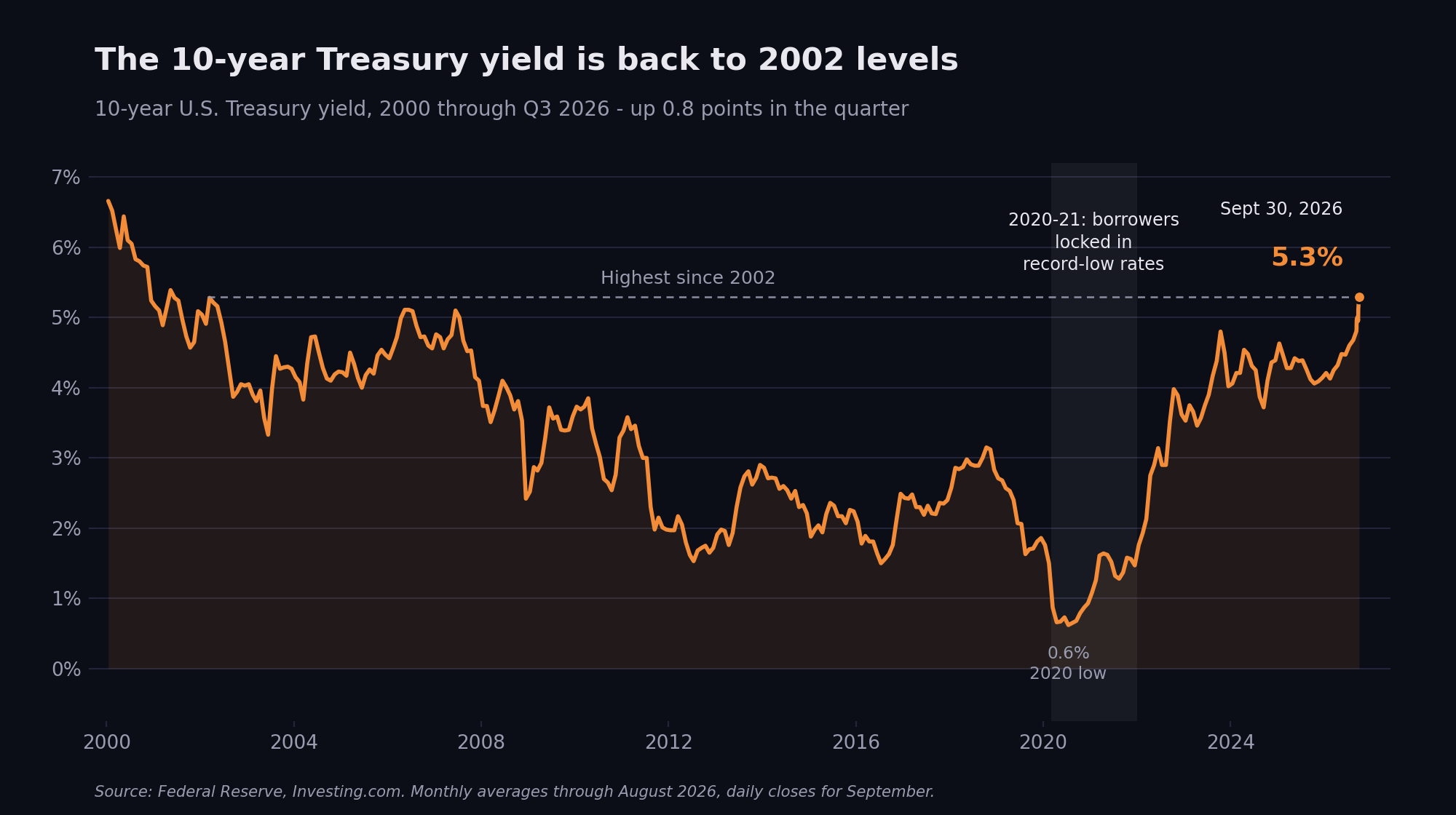
Two of our July calls did not hold: we expected the truce to bend without breaking, and we did not expect a rate hike before the election. What did hold was the earnings strength at the core of our view and the caution we flagged for September onward. Interest rates are now the variable that matters most, and much of this letter is about what that means for portfolios.
Growth & Inflation
The economy has stayed resilient, and we see three reasons for it. AI capital spending continues to drive business investment, which is growing at roughly a 20% annual rate. Reduced immigration has kept the labor market tight even as hiring slows - payrolls rose just 29K in September, yet unemployment sits at 4.2%. And higher-income households, with asset values at record highs, are spending enough to carry overall consumption. Q2 GDP was revised up to 2.2% and third-quarter estimates are tracking above 3%. It is a narrower version of our US Resilience theme - strong at the top, softer underneath.
The strain shows up at the pump. Gasoline averages about $4.50 a gallon, diesel is at a record, and consumer sentiment is down 15% since January, with wages no longer keeping pace with prices.
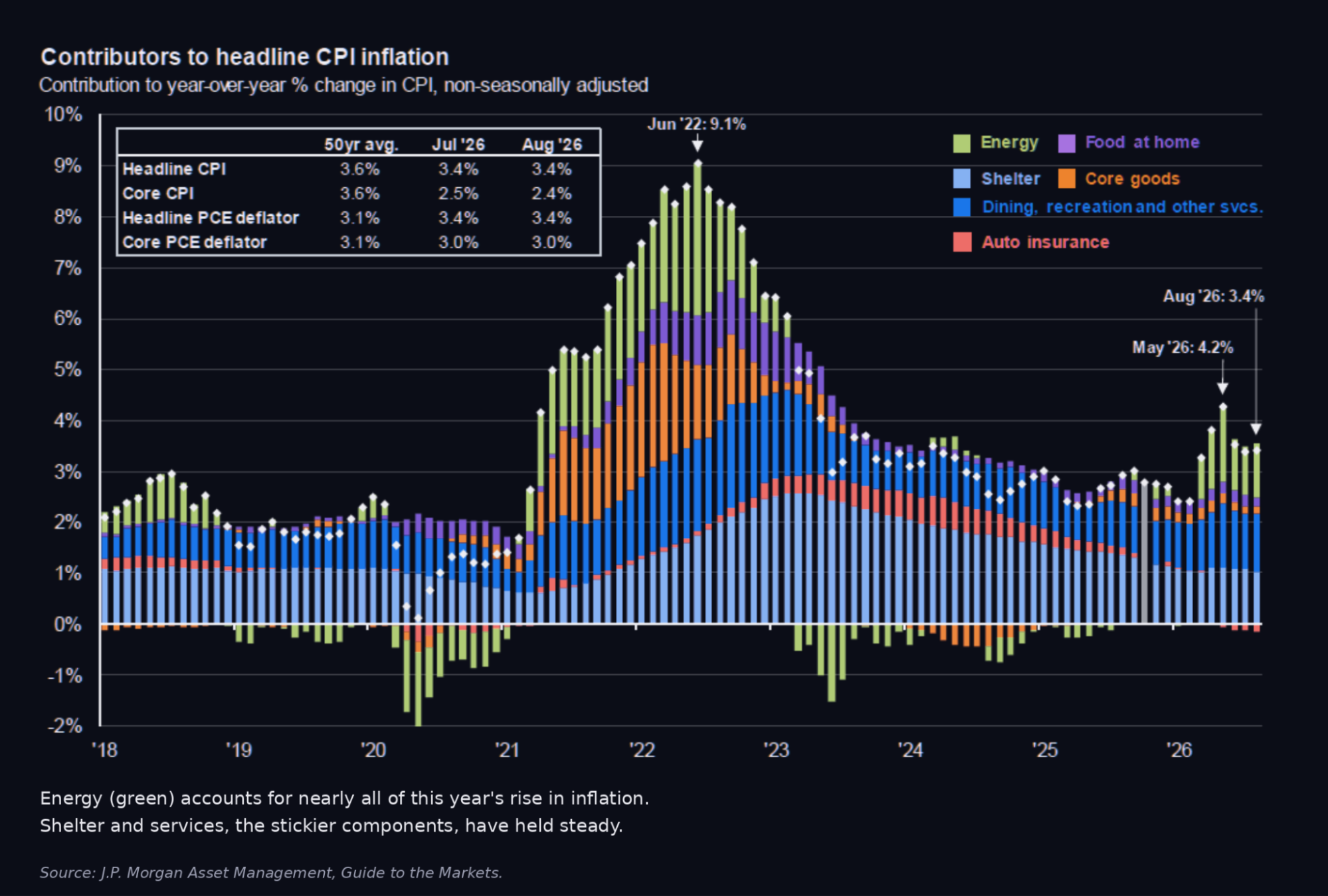
Inflation is splitting in two (see chart below). Core measures are behaving - core PCE has eased to 3.0% from 3.4% in May, and core CPI is 2.4% - and headline PCE has come down to 3.4% from 4.1%. But the further relief we looked for this fall depended on crude holding near $70. With WTI above $90 and Brent above $100, headline inflation is stalling in the mid-3s rather than rolling over.
Monetary Policy & Liquidity
On September 16 the Fed raised rates a quarter point to 3.75-4.00% - unanimously - and 16 of 18 policymakers project another hike by year-end. We read the move as a bid for credibility more than a belief that higher rates can fix an oil shock. Core inflation is already easing, and the Fed cannot reopen a shipping lane.
That is why our "dove in hawk's clothing" read is delayed, not dead. Warsh again declined to submit a rate projection and distanced himself from the committee's forecast that inflation will not reach 2% until 2029. The Fed's statement now describes productivity growth as strong - the center of his case that AI allows the economy to grow faster without inflation - and his task forces deliver preliminary findings this fall. He is building credibility first, which pushes easing out. After September's weak jobs report, markets have shifted their bets on the next hike from October toward December. Whether the committee moves once more or stops here, we expect a long pause to follow, with easing a late-2027 story at the earliest.
Financial Markets
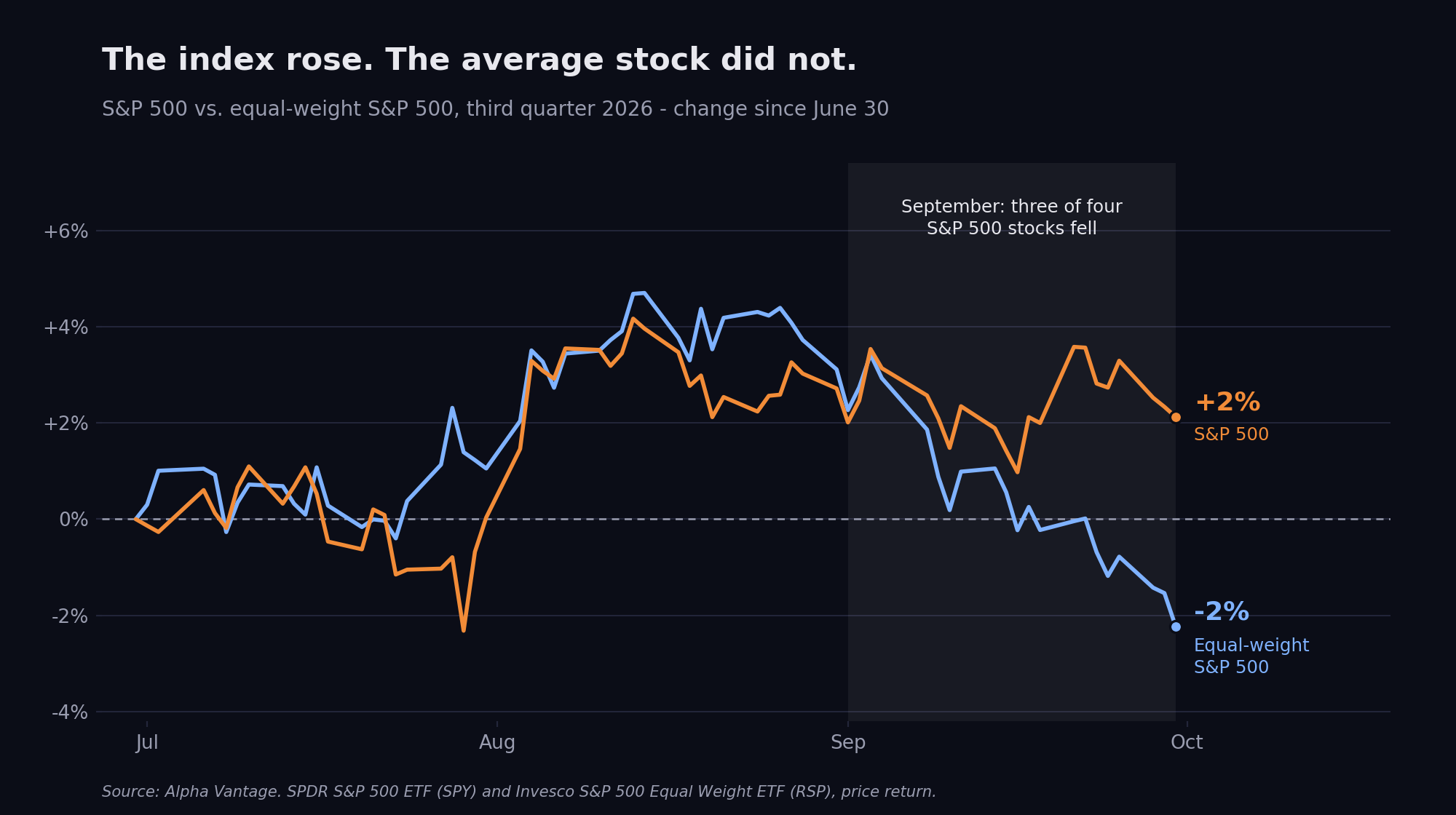
The S&P 500 gained 2.0% and the Nasdaq 2.5%, while the Dow fell 2.7%. Those figures flatter the quarter - small caps fell about 7%, the average S&P 500 stock lost ground, and in September three out of four stocks in the index declined, with technology the only sector to finish higher. The path was uneven as well: semiconductors fell roughly 25% from mid-June to late July on doubts about AI spending before recovering as earnings came in.
Bonds were the bigger story. The 10-year Treasury yield rose from 4.5% to 5.3%, with about half a point of that coming in September alone, and the 30-year mortgage rate reached 7.3%. Brent spent most of September above $100, and gold held near $4,200 despite the jump in yields.
What's Ahead
The administration and the Fed still have every incentive to keep markets stable, but the third quarter showed the limits of that. Gasoline is back near $4.50, the truce has given way to renewed fighting, and long-term rates kept climbing even after the Treasury doubled its buybacks of long-dated bonds in August. With forecasts favoring Democrats to take the House and, more narrowly, the Senate, markets are heading into November with less of a cushion than they had over the summer, and with a bond market that is increasingly setting the terms for everything else.
Near - Medium Term (3-6 Months)
The backdrop that carried markets to record highs is still largely in place. The economy remains resilient, and earnings continue to surprise to the upside - for the third straight quarter analysts raised their estimates as the quarter went on, and they now expect 29% growth, with a record number of companies guiding higher. That strength, though concentrated in AI and energy names, has allowed valuations to ease even as prices held near their highs, with the S&P 500 now trading around 19x forward earnings versus more than 20x at mid-year.
What has shifted is the balance of risks, and interest rates are at the center of it. We view the rise in long-term yields as more structural than temporary. The wave of debt issued at near-zero rates in 2020 and 2021 is now coming due and has to be refinanced at today's levels, the Treasury is funding a deficit north of $2 trillion into soft auction demand, and AI-related borrowing is competing for the same pool of capital. A pullback in oil would offer some relief, but likely not enough to change that picture on its own, and we would not rule out the 10-year testing the 5.5-6% range before buyers or policymakers push back.
Equities have not had to contend with yields at these levels in more than twenty years, and they are doing so alongside an oil shock, a Fed that has turned to tightening, and an election now four weeks out. Taken together, we think the probability of a drawdown larger than a garden-variety correction is the highest it has been since 2022. This is not a call for a recession or for the end of the bull market, but a deeper and longer reset, potentially playing out over three to six months, has become a real possibility rather than a remote one.
The midterm elections add to the uncertainty. Divided government looks like the most likely result, which markets generally appreciate. The weeks that follow, however, bring a December 11 government funding deadline and, by several reports, the prospect of renewed military action against Iran - the kind of issues we noted in July could resurface on less friendly terms once the vote has passed.
Our approach is to treat this as a strategic event to position for. In our Enhanced Growth strategy, we are gradually reducing the portfolio's equity beta as we anticipate larger-than-usual volatility on the horizon. This is a measured shift, made by trimming equity exposure in steps and building our alternatives sleeve - gold, market neutral and long/short strategies, Treasury bill and option income, and buffer funds - positions that are less tied to the direction of stocks. We continue to see little reason to own bonds beyond one year on a structural basis, though a capitulation in the bond market could present an attractive trade, and we would approach it as exactly that.
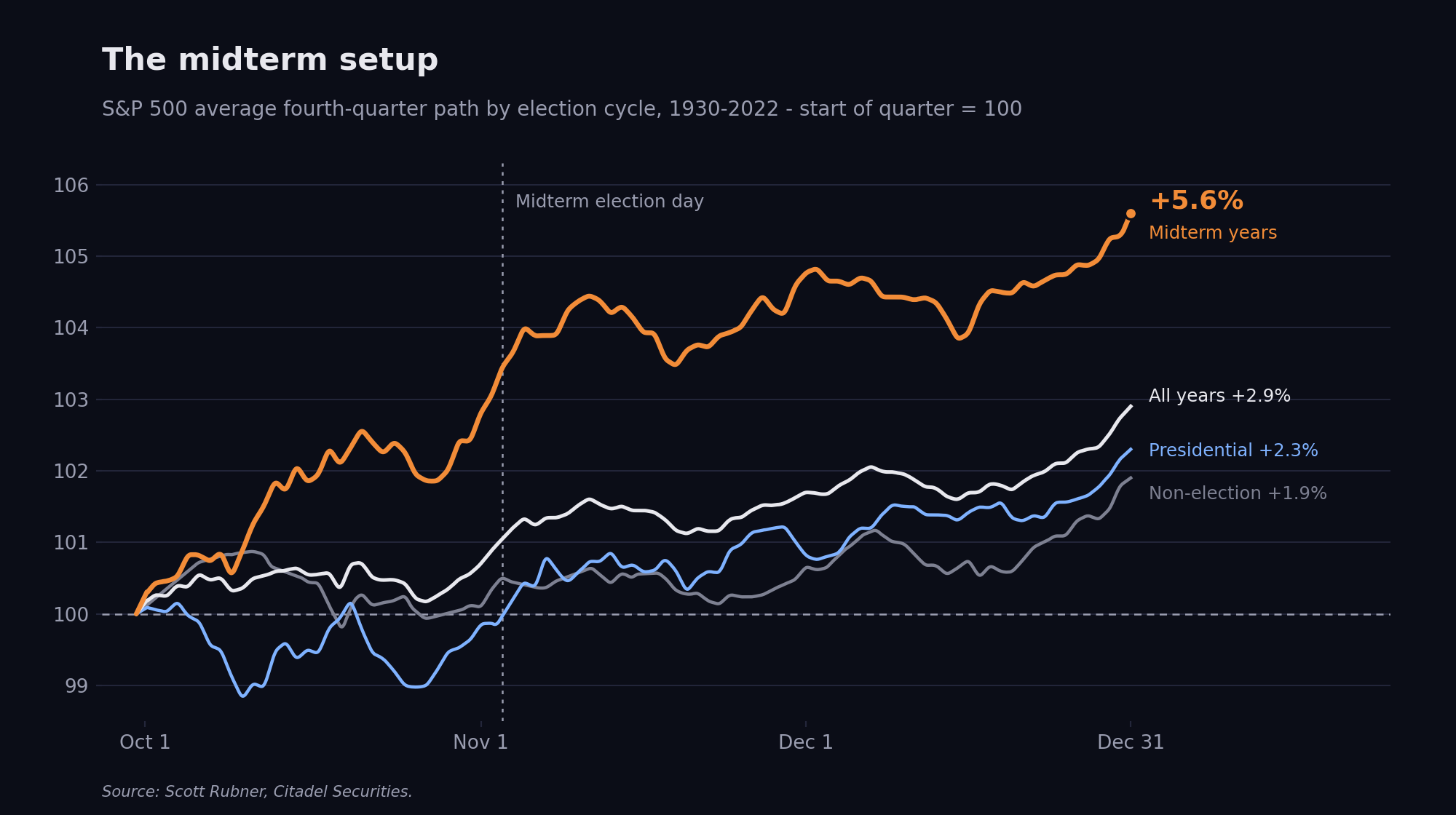
That caution sits alongside a favorable calendar. The fourth quarter of a midterm year has historically been one of the strongest stretches of the election cycle (see chart below), and as we discuss next, our longer-term outlook remains constructive.
Longer Term (6+ Months)
Our longer-term view on equities has not changed: we want to be allocated to them. Markets should ultimately resolve higher, though the timing is difficult to pin down and the path there may be rougher than investors have grown used to. Part of our confidence comes from how we expect policymakers to respond. We do not believe a disorderly move in either bonds or stocks would be left to run. The Treasury has already stepped up its buybacks and made clear it has more tools available, and in a more serious drawdown we would expect the Fed and Treasury to act more forcefully to contain long-term yields and stabilize markets. This is also where our "delayed, not dead" read on Warsh comes back into play - the credibility being built today is what makes that kind of support believable when it is needed.
We would also expect Washington to continue, and possibly accelerate, its direct investment in industries it views as strategic. The stakes already taken in Intel and MP Materials are early examples, and we see this as an increasingly important form of support for areas tied to national priorities - semiconductors, energy, defense, and critical materials.
None of this comes free, and the cost runs through our Debasement theme. Containing yields while funding large deficits and strategic investment ultimately means more money creation, which in our view keeps inflation above the Fed's target for longer than markets currently assume. That backdrop continues to favor equities, gold, and real assets over long-dated bonds, and it is a large part of why a period of volatility does not change where we want to be invested over time.
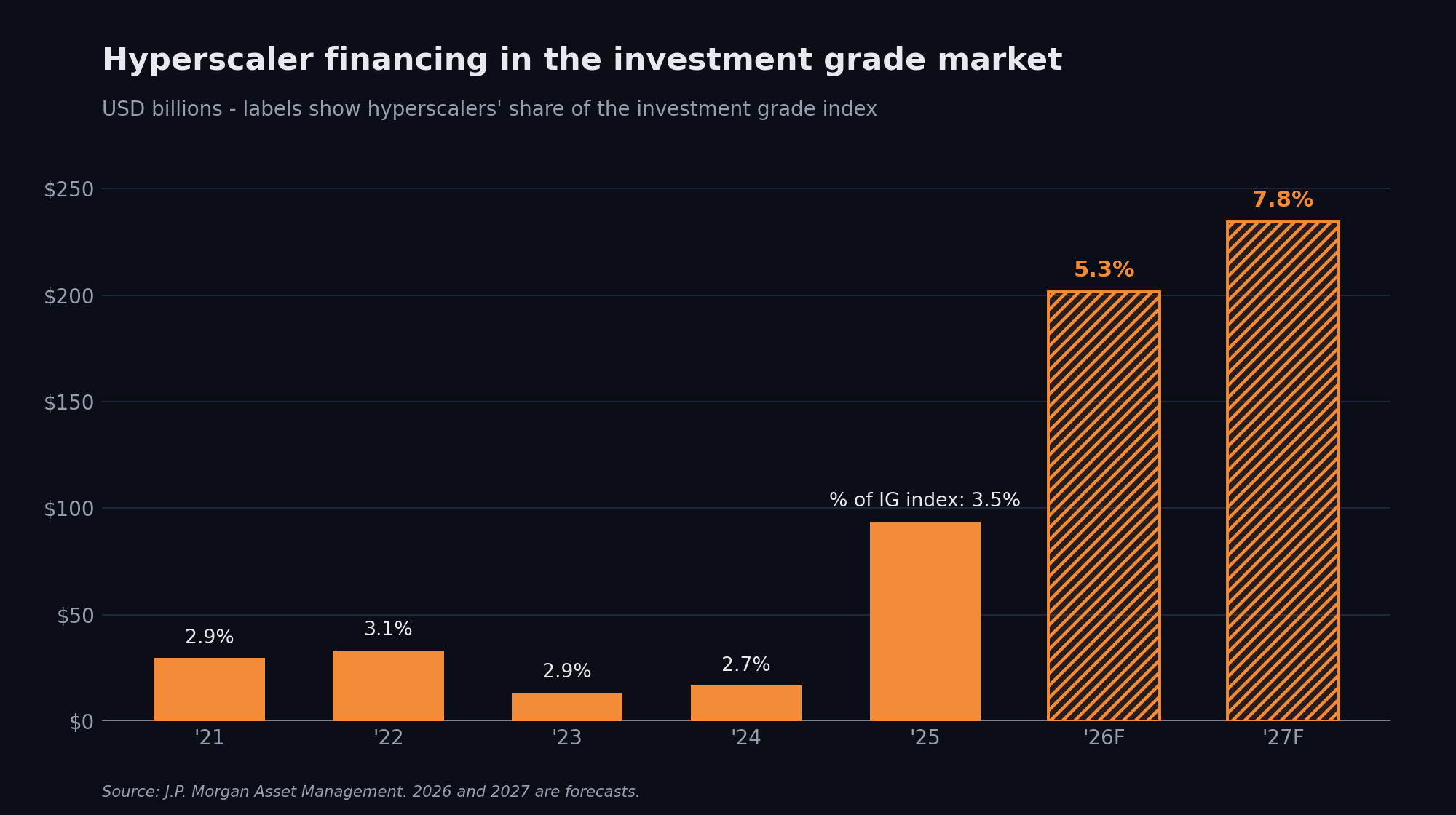
The AI investment cycle, meanwhile, is maturing rather than fading. The five largest spenders are on pace for roughly $800 billion in capital spending this year, up over 90% from 2025. The area we are watching most closely is financing - higher rates raise the cost of every debt-funded buildout, and lenders have become more selective with lower-rated borrowers - which reinforces our preference for companies funding their investment from cash flow. Notable too is how much this spending has increased vs 2025 estimates.
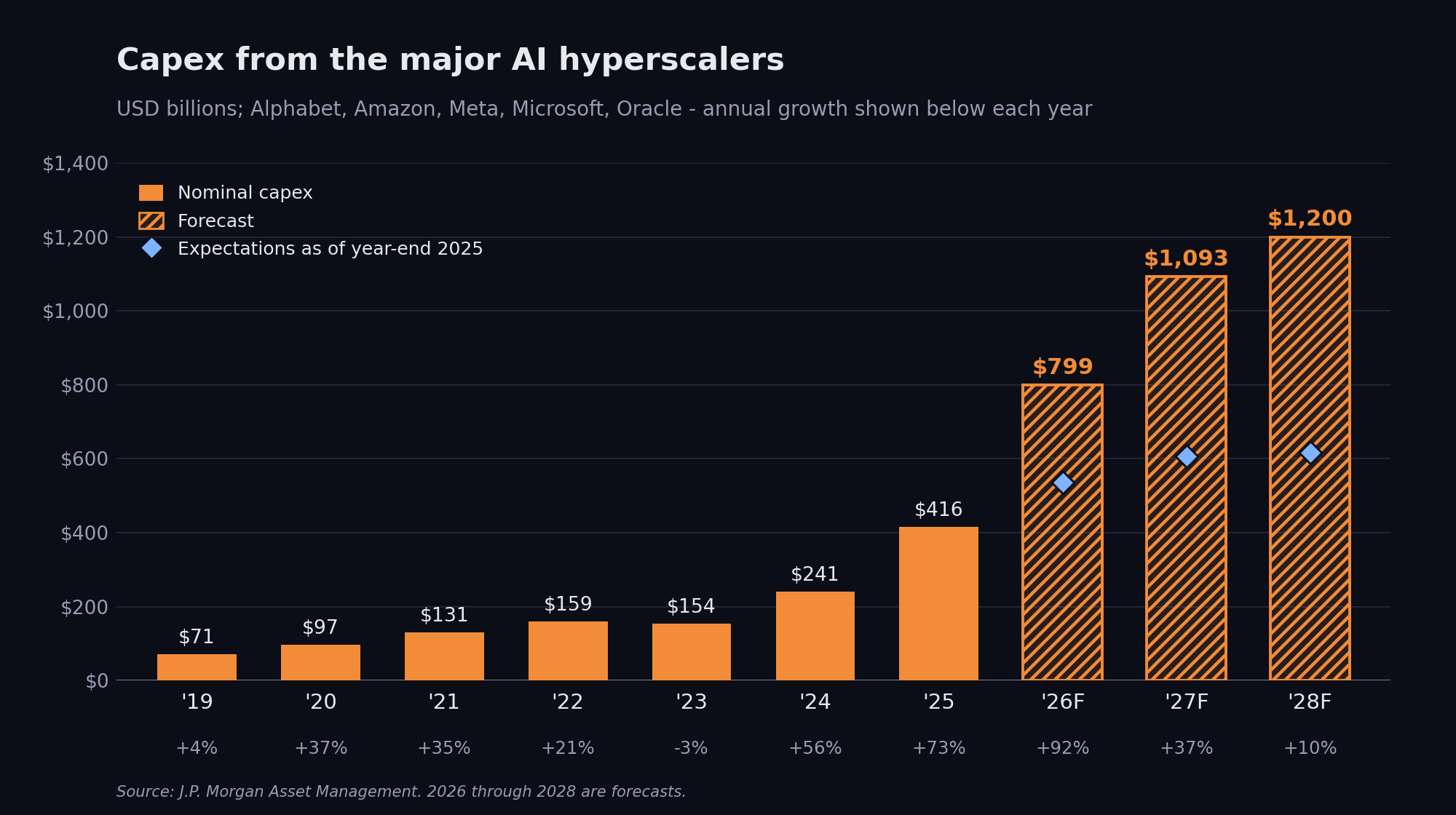
Pulling it together: earnings on track for a third straight quarter of growth above 25%, record margins, and a resilient economy are not the conditions under which bull markets typically end. Yields above 5% and a Fed tightening into an oil shock are, however, the kind of conditions that interrupt them, and we think the odds of a larger interruption have gone up. We see that as something to prepare for and, if and when it comes, to use - consistent with remaining equity investors for the long term.
Key Levels (As of October 2026)
- GDP Growth (2026 Est)
- 2.3%
- Inflation (Y/Y PCE)
- 3.4%
- Unemployment Rate
- 4.2%
- Fed Funds Tgt
- 3.75 - 4.00%
- 10 Year Treas Yield
- 5.3%
Reasons to Be Bullish
Earnings Keep Clearing a High Bar
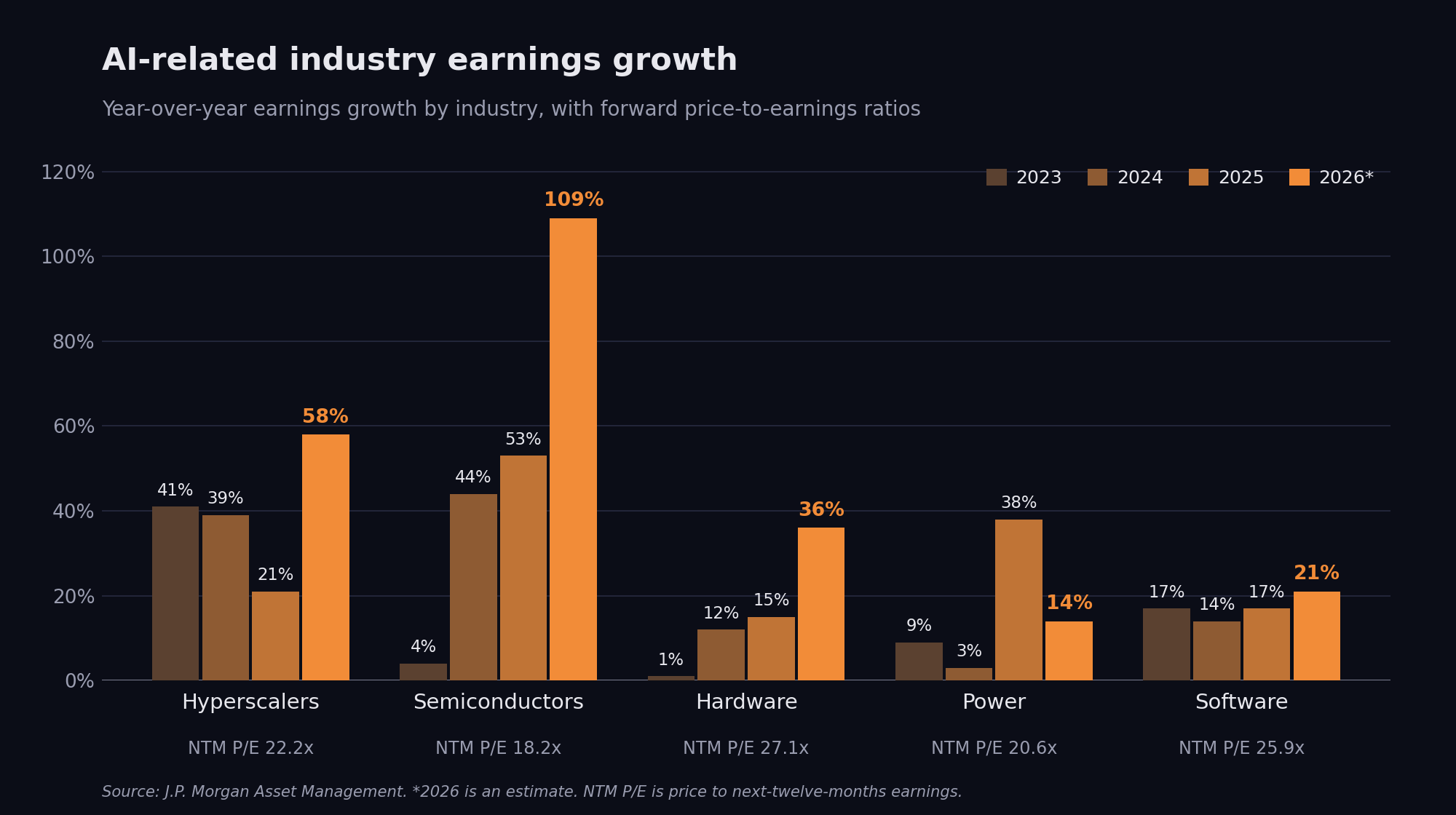
Q2 growth came in at 52% - roughly 34% excluding one-time investment gains at Alphabet and Amazon - against the 23% expected, with margins at a record 17%. Q3 is expected at 29%, and estimates rose during the quarter when they normally fall. Earnings growth is accelerating this year in four of the five AI-related industries shown below, led by semiconductors.
Valuations Have Reset
Profits have grown faster than prices. The S&P 500's forward multiple has eased to roughly 19x, below its five-year average, with the index still near its highs.
Policymakers Have the Motive and the Tools
The Treasury has already doubled its long-dated buybacks and signaled it can do more, and Washington continues to take direct stakes in strategic industries. We would expect a more forceful response to any disorderly move in bonds or stocks.
Core Inflation Is Cooperating
Outside of energy, inflation is moving toward where the Fed wants it, and slower hiring gives the committee room to pause. That combination supports our view that the hiking cycle is short.
Reasons to Be Bearish
Bonds Now Compete With Stocks
At 5.3%, the 10-year Treasury yields roughly what the S&P 500 earns on a forward basis, and mortgage rates are at 7.3%. Utilities, real estate, and financials fell hard in September, and those areas are unlikely to find relief until yields turn.
The Fed Is Tightening Into an Oil Shock
Most of the committee projects another hike this year, and higher rates do little for inflation driven by energy supply. If the Fed keeps tightening against a problem it cannot fix, the risk of a policy mistake grows.
A War With No Agreement
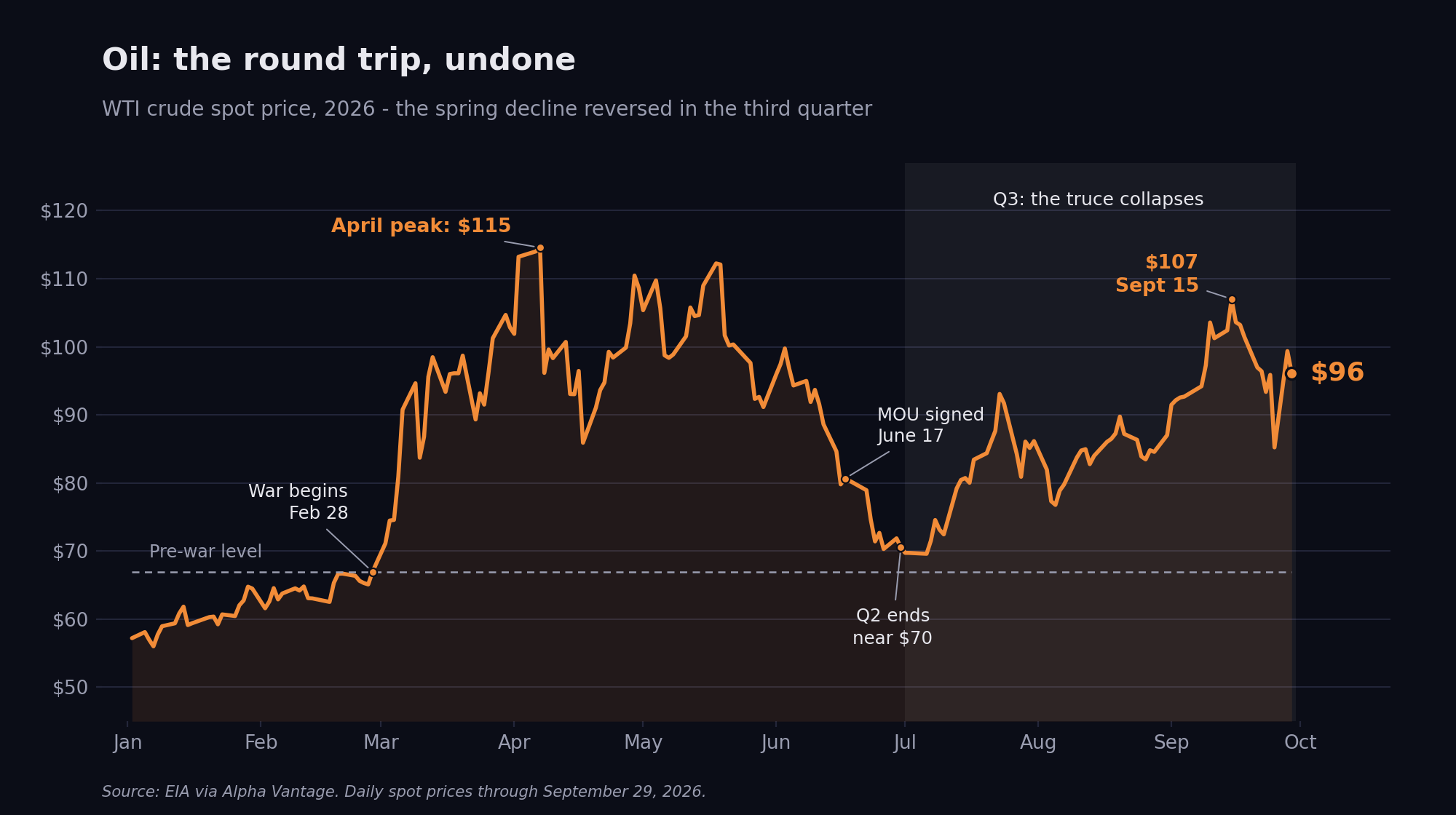
The June MOU has collapsed, oil has reversed more than half of its spring decline, and diesel is at a record. Talks are stalled, and the risk of escalation appears to rise after the election.
A Narrow Market
A small group of AI leaders and energy stocks produced the quarter's entire gain while the average stock fell, and chip stocks dropped 25% in six weeks over the summer. A market this concentrated has less to lean on if its leaders stumble (see chart below).
Portfolio Highlights & Current Themes
AI & Technology
MSFT was the standout, up 37% - its best quarter since 1998 - after Azure growth accelerated to 43% while 2026 spending plans held steady. Its July 30 gain was the largest one-day increase in market value on record. NVDA rose 14% as revenue doubled from a year ago, while GOOGL slipped about 4% after raising its spending plans again and QQQ finished roughly flat as the summer chip selloff offset gains elsewhere. That spread reflects the selectivity we wrote about in July - the market is rewarding AI revenue and growing wary of spending that runs ahead of it.
Energy & Defense
XOM and CVX gained 20% and 24%, our largest contributors outside technology, with energy sector profits expected to more than double year-over-year in Q3. Defense and industrials went the other way - ITA fell 14%, HON 6%, and CAT 24%, the last as the data-center power trade unwound and higher rates weighed on industrials broadly. We continue to view these as core holdings for a more fragmented world, though the quarter was a reminder of the valuation risk that follows a big run.
Debasement & Real Assets
Gold (IAU) gained about 3%, which understates how well it held up - real yields surged and the dollar strengthened, the two things that normally weigh on gold most, and it still finished higher.
Quality & Consumer Resilience
JPM and V were steady. WMT and COST slipped as analysts trimmed estimates across consumer staples, and UNH gave back 11% after a strong first half, though it reaffirmed full-year guidance in September. LLY was modestly lower.
Alternatives
This was the kind of quarter our alternatives are built for. The broad bond index lost about 3.5% and long-term Treasuries about 9%, while CTA gained roughly 13%, QMNNX about 7%, and BUCK held steady. In Enhanced Growth and Enhanced Income, these positions provided the ballast that bonds did not, and they are where we are adding as we bring equity beta down.
Closing Thoughts
The quarter left investors with higher oil, higher rates, and a narrower market than the headline indexes suggest, and we think the odds of a larger-than-usual pullback are the highest they have been since 2022. We are positioning for that gradually - lowering equity beta and leaning further on alternatives - rather than stepping away.
What has not changed is where we want to be invested over time. Earnings are growing at their fastest pace in five years, AI investment continues to exceed even optimistic forecasts, policymakers have both the motive and the tools to respond to disorder, and the forces behind our Debasement theme keep building. Volatility of the kind we are preparing for is something to reposition through and, ultimately, to use.
This content, which contains security-related opinions and/or information, is provided for informational purposes only and should not be relied upon in any manner as professional advice, or an endorsement of any practices, products or services. There can be no guarantees or assurances that the views expressed here will be applicable for any particular facts or circumstances, and should not be relied upon in any manner. You should consult your own advisers as to legal, business, tax, and other related matters concerning any investment. References to any securities or digital assets, or performance data, are for illustrative purposes only and do not constitute an investment recommendation or offer to provide investment advisory services. Charts and graphs provided within are for informational purposes solely and should not be relied upon when making any investment decision. Past performance is not indicative of future results. The content speaks only as of the date indicated. Any projections, estimates, forecasts, targets, prospects, and/or opinions expressed in these materials are subject to change without notice and may differ or be contrary to opinions expressed by others. Investments in securities involve the risk of loss. Clients of DePaolo & May Strategic Wealth may hold positions in the securities discussed in this content. Please see disclosures here.